
What is the place of 'emotion' in the Christian life?
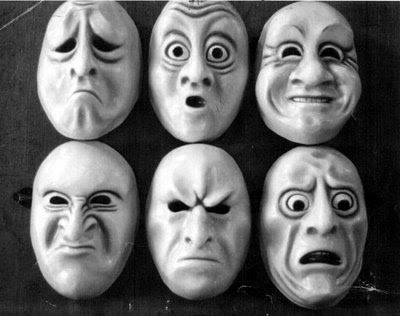
pulpit

I've recently been diagnosed with depression. So I've been pretty man down lately. I have started on a dose of anti-depressants, and they're slowly kicking into my system. As I was on my way up I was hit by a solid bout of flu. As much as flu sucks, I honestly quite enjoy the time in bed to sleep, read and think.

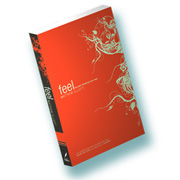
During this time I started reading a book called 'Feel'. In it Matthew Elliott argues that if we downplay emotions in the Christian life, we distance an important, God-given part of ourselves.

Here's the description from the Amazon page:

"In Feel, Matthew Elliott takes a critical look at what our culture and many churches have taught about controlling and ignoring our emotions. He contends that some of the great thinkers of the modern era got it all wrong, and that the Bible teaches that God intends for us to live in and through our emotions. Emotions are good things that God created us to feel. Matthew helps us to understand our emotions and equips us to nurture healthy feelings and reject destructive ones. So refresh yourself, drink deeply, and learn to live with a new, passionate heart".
pulpit I'll be honest, after reading the subtitle ("The power of listening to your heart") my sensors were tingling a little. But, surprisingly, it was brilliant! It gripped my heart and sent my mind all over the place as I thought about whether it clashes with anything in my theology. I think the best part was that it got me to read the Bible and pray with a new air of excitement.

Has anyone who checks in here read it? If you have, I'd love to hear your thoughts about it. I'm convinced by his argument, and think he highlights something important which is downplayed or, at least, overlooked in most reformed circles. It has given me something to chew on as I think about how to approach my pretty significant emotional. So I'm looking for an opportunity to chat about some of the ideas he raises.

I realise that most of you won't have read it though. Obviously I recommend you give it a read. But most of you won't have the time for that. So, because I would still like you to get involved, I have made a plan for you. I have made something of a summary. Give that a read, and then let me know your thoughts below.

P.S. I've also been thinking about posting something longer on godliness, friendship and intimacy. So keep an eye out for that too.

Comments

My view is that God gave us

My view is that God gave us emotions, which means that we should expect to experience them in our Christian life.

But while some Christians argue that Reformed-type Christians are a bunch of emotion ignoring robots, I would argue that many Christians are swept up in the false belief that the only emotions Christians should experience is joy.

Yes, we should experience joy and happiness as Christians. But we should also experience pain, anger and depression. Moreover, we should ensure that our emotions do not control our actions since the Fruit of the Spirit is self-control. Controlling emotions doesn't mean denying them - it just means we experience them without having them control our minds.

Insofar as public worship is concerned, the prayers that we pray, the songs we sing and the preaching we hear should all contain appropriate emotional expressions. I remember the first time I heard "Create in me a clean heart oh God" by Keith Green (and King David, of course) my heart was broken in tearful repentance. The last verse of "And Can it be" (which starts with "no condemnation now I dread") strikes my heart with joy. Another song we sing (which I can't remember the title of) has a line in which Jesus controls my destiny "from life's first cry to final breath", which chokes me up when I first consider my children (who I was present at the birth of) and my mother in law who recently went to glory.

tl;dr Emotions are appropriate in the Christian life and also in public worship. All emotions, including negative ones, are right to be experienced. The Spiritual fruit of self-control, though, should govern how influential these emotions should be over our Christian lives.

I've just read Surprised by

I've just read Surprised by Joy by C. S. Lewis which is probably biasing my response to your comment. Although I agree that we are supposed to experience emotions I'm not inclined to agree with your undermining of Joy as primary for the Christian. I would also point out that the three songs you mention (the name of that last song is "In Christ Alone" by the way) all point to Joy - the Joy of our salvation.

I think emotions are appropriate for humans and I think they are right I'm still trying to figure out their appropriate role though. I appreciated Grace's comment that we need to "move away from the binary tension between reason and emotion" but the difficulty as she points out is that emotion can be misleading. Because emotion can be misleading, the conservative tradition relegates it to hype (which it often is).

The trick is going to be balance because even "self-control" is not going to magically solve the problem. I still want to do some thinking on this Joy stuff though...

Welcome!

Hey, thanks for the comment :)

A friend of mine is writing a dissertation at the moment entitled "The Psalms of Lament as an Expression of Worship for those suffering from Depression". I suppose the one thing that is clear from this title (and which agrees with you) is that the Lament Psalms express what is commonly thought of as negative emotion. Yet they are included in the canon as appropriate expressions of praise to God. In fact, they even become corporate expressions of praise. So there must have been a situation where it was appropriate for Israel to sing songs of this emotional character. That strikes me as unusual, but reasonably encouraging.

Perhaps this helps me understand one point which Elliott makes. He says that emotions in the Bible don't take their edge from anything within the emotions themselves, but from the object of any specific emotion (e.g. jealousy for wife's affection vs. jealousy for neighbours car). If he is right then we should expect to experience the full range of emotions. But we should be considering the object of the emotions to see if we are right or wrong to be feeling them. And if the object is misguided, then we have got to do the work of digging underneath and working through what repentance will look like.

I suppose the one point of yours which I want to challenge is the one about experiencing (and understanding) our emotions without having them control our minds. Elliott takes a strong position against this sort of thought. It seems to me he is right on two fronts.
Firstly, our minds are just as corrupt as our emotions, and so we should not trust one more than the other. Both were affected equally by the fall. So it seems to me that we should rather be saying that the truth of God comes in a dynamic way to our entire being, and therefore we should be wrestling to bring our entire being (both emotion and mind) under that revelation.
Secondly, if the above is correct, it seems that our emotions and our thoughts are equally valid motivations for our actions. Surely we should be cultivating both Godlike emotions and thoughts, which in turn impact how we act? Perhaps we would even want to place our actions alongside our emotions and our reason and say that all are directly motivated by the Word.

Thanks again. I hope you're able to reply.

Mind over Emotions

With your first response, have you considered that they are affected in different ways?
The reason I ask is because if that's the case, it may be possible that where emotion fails, reason is trustworthy and reason is not trustworthy in some other place.
Although, having said that I'm not sure how that fits with total depravity (in that *every* thing is affected by the fall - arguing that it's affected in a different way seems like a bit of a cop-out, the point is though that maybe reason and emotion are supposed to counter-balance each other).

I feel a bit uncomfortable

I feel a bit uncomfortable with what I perceive to be going on behind your comment, but I'm very keen to hear you develop that thought...

The thing is, something like

The thing is, something like maths seems to work pretty effectively to identify something as true or false.

1 = 1
1x1 = 1
2 != 1

Emotions don't seem to be the tool for detecting that kind of truth.
To make this comment valuable it seems as though I need to say what emotions are good at but I don't really know because I'm a robot.

something along these lines

something along these lines perhaps: http://serendip.brynmawr.edu/bb/damasio/Damasioreview.html

I guess my response to that,

I guess my response to that, which I appreciate you will not find satisfactory, is incredulity.
I have issues with drawing conclusions about the way we reason based on a case study about someone with brain damage. I struggle to accept that neurologists fully appreciate what is going on in the brain with enough certainty to say, "Ja that bit's broken so now he can't make wise decisions" - even the impairment is subjective.
You may not like it but that's where I am right now. Would be keen to discuss though.

Comment by Grace K

Let me make my stance concerning reason and emotion clear from the beginning: I am far more rational and logic-driven than emotional, and that's why I've always felt at home within the type of rational conservative circles that Elliott describes in the beginning of his book.

Having said that, God has slowly been showing me over the last few years that I am also an emotional being, and that emotions are good and that they are of great value in our lives, like Elliott argues. God has been teaching me to acknowledge my feelings, to trust my feelings, and to talk about them. I have found that God has not only been redeeming my mind, my spirit, but also my emotions.

Yet, I maintain a sense of caution that prevents me from allowing my emotions from controlling me completely - as a female whose mood swings drastically once a month due to hormonal changes, I am all too well-aware of the dangers of trusting my emotions too much. Emotions DO play tricks on us, as our reason does at times as well (which is why God commands us to take control over our minds probably just as often as our emotions).

All in all, I found Elliott's book very helpful, albeit very very drawnout with personal anecdotes. I thought he made some great points concerning the Bible's inclusion of emotions, how to deal with your own emotions, and how emotions are so valuable etcetc. My biggest issue with him, however, was that he fell into the very fallacy that he kept on cautioning us against: he warns against privileging emotion over reason, and reason over emotion, I finished the book feeling that he was very much saying that emotion is Numero Uno.

Ultimately I love his point that we need to move away from the binary tension between reason and emotion that pits them against each other, and instead try to understand them as an interconnected dynamic web, that might not always have a direct causal relationship, but are always interlinked.

Grace K

on your marks...

Grace, we chatted about this response privately before I got a chance to post thoughts here, so I won't rehash that now*.

I just wanna ask you if you've had any thoughts on what their relationship would like as an "interconnected dynamic web"? I've been trying to sketch it out in my mind since our chat. I suppose because I want these thoughts to leave a lasting impression on me. But(!) then I remembered that you have all this creativity inside you that I can take advantage of :P
(I can let you know my thoughts if you want, but I don't wanna stunt your imagination).

*for those out of the know, perhaps I *should* rehash the conversation:
--Kyle: I agree with your crit, but felt he was overstating his point so he would be heard.
--Grace: Agreed, but that could compromise your reputation as an objectively neutral voice.
--Kyle: Fair enough.

...hmmm, I remembered it as being more profound than this. Maybe I've forgotten some beautiful nugget you shared.

As someone who battles with

As someone who battles with up and down emotions myself i understand your desire to understand this area of our lives. I think that emotions are a gift from God, we get them from God as we are made in His Image and have anger, love, hope, longing etc as He does. The problem is that we deal with them.... sometimes in a sinful way.

When James tells us to "consider it pure joy when we face trials" as we should because we know (or should know) that the Lord who loves us and cares for us is busy working all things out for our good (eternal good) we see failure or lack of things that we think would make us happy. So we allow our emotions to take us down a negitive path instead of aligning our present situation with the eternal loving perspective of our loving Father.

Perhaps we do this because of a simple lack of trust in Him, because if we did believe that He is working all things for our good, that we need to cast our anxieties on Him because he cares for us and the other 100s of places the word reminds us of these facts then we should be full of joy at all times. Its`nt that what Paul meant here Rom15:13 May the God of hope fill you with all joy and peace as you trust in him, so that you may overflow with hope by the power of the Holy Spirit.
EMOTION + THROUGH THE EYES OF TRUST IN GOD = OVERFLOWING JOY + HOPE
JOHNTELLIS

Question

Just a quick question: are you saying that we should use our emotions as indicators? So, with the example above, we see our wrong perspective when our emotions don't line up with what the Bible says we should be feeling?

p.s. thinking of visiting in Dec -- would that be possible?

Feel

Hey Kyle a most relevant topic when it comes to people and how they function, particularly Christians. I have not read the book neither your summary as I want to speak from my own understanding and experience of emotions and the Christian. So, I believe that God had created us with emotions so therefore it is an integral part of who we are. when we encounter problems, HOW we respond to them is something that either brings negative or positive emotion, hence the counselling process which seeks to identify the reason for our problem. Emotions then in and of themselves are not a problem but an expression of what we feel. Paul A

Counselling and Growth

Uncle Paul, I know you've thought about this stuff a lot. Won't you please say a bit more about the place of emotions in the counselling context. Or at least the place of emotions in our own personal struggle in growth.

Website by James Cuénod for the Glory of God